Descriptors
Cupping profile SCA 2004
The La Gaviota farm is a family coffee project located in the municipality of La Argentina, at an altitude of 1,900 meters. Farmers Leider Ivan Benavides and Andrea Marcela Ferreira started this project in 2017. They bought a small plot of land and planted it with several thousand coffee trees of the Castillo and Pink Bourbon varieties. From the very beginning, their goal was to produce microlots with traditional washed processing, and over time they decided to replace the Castillo trees with varieties with more powerful genetics. At present, the farm has 2,000 Pink Bourbon trees, 1,000 Papayo and 2,000 Catimor.
In 2025, Leiner and Andrea acquired another small farm (El Cedro) right nearby and planted it with 1,300 trees of the Pink Bourbon variety and 700 Geisha trees. The first harvest from the new farm is expected in 2027.
Process details
The process begins with the manual and selective harvesting of the coffee cherries, ensuring only ripe cherries in optimal condition are collected. The coffee undergoes an initial wash. Subsequently, a flotation process in water is performed to separate and remove damaged or low-density cherries.
After selection, the whole cherries are placed in 200-liter plastic tanks, where a first fermentation stage of 24 hours takes place.
Once this stage is finished, the coffee is depulped, removing the pulp and leaving the beans covered in their mucilage layer, then it moves to a second stage of fermentation in mucilage for 36 hours. During this period, circular movements are performed every 2 hours to promote fermentation homogeneity.
Once the fermentation time is complete, the coffee is carefully washed to remove mucilage residues and stop the fermentation process.
Subsequently, it is taken to dry in a parabolic dryer for 25 days; during the drying process, the coffee is moved 3 to 4 times a day in a uniform and constant manner.
Delivery cost — FedEx
Door-to-door courier estimate. We pack in 24 kg and 12 kg boxes; one courier consignment carries up to 60 kg — larger orders are split into several shipments, each priced separately.
FedEx options
Destination not served by courier, or still have questions? Write to sales@lafamiliacafe.co — we normally answer within a few minutes.
Scored by our Q-grader
Cupped and graded in strict accordance with the CQI protocol — the score and profile above are ours, not a reseller's.
Traceable to the farm
Bought directly from the family that grew it in Huila — full traceability down to this single lot.
Try before you commit
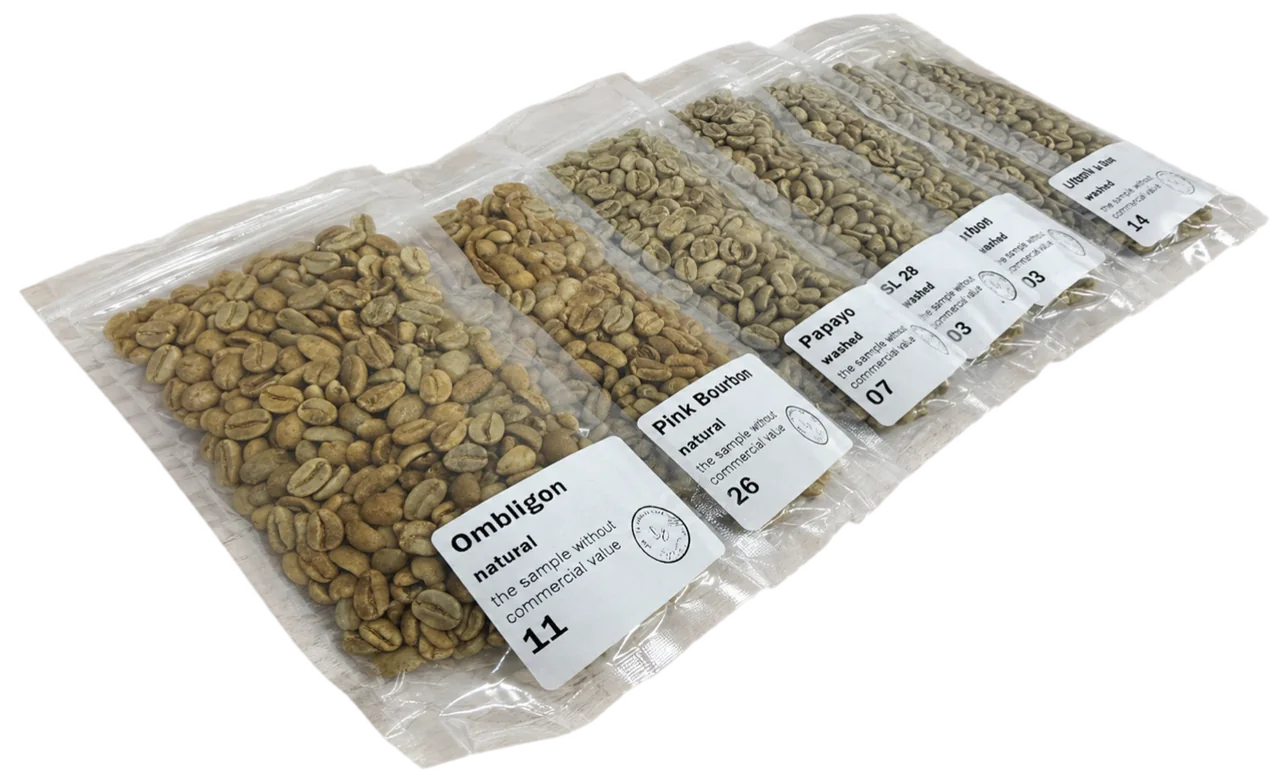
Request a sample of this exact lot; we confirm pricing, availability and lead time with it.
Shipped your way
From 24 kg to a full container — FOB, CIP, CIF or DDP, by courier, air freight or sea.
Good to know
Yes — samples of any lot are arranged on request. Use the form on this page and we’ll confirm pricing, availability and sample details.
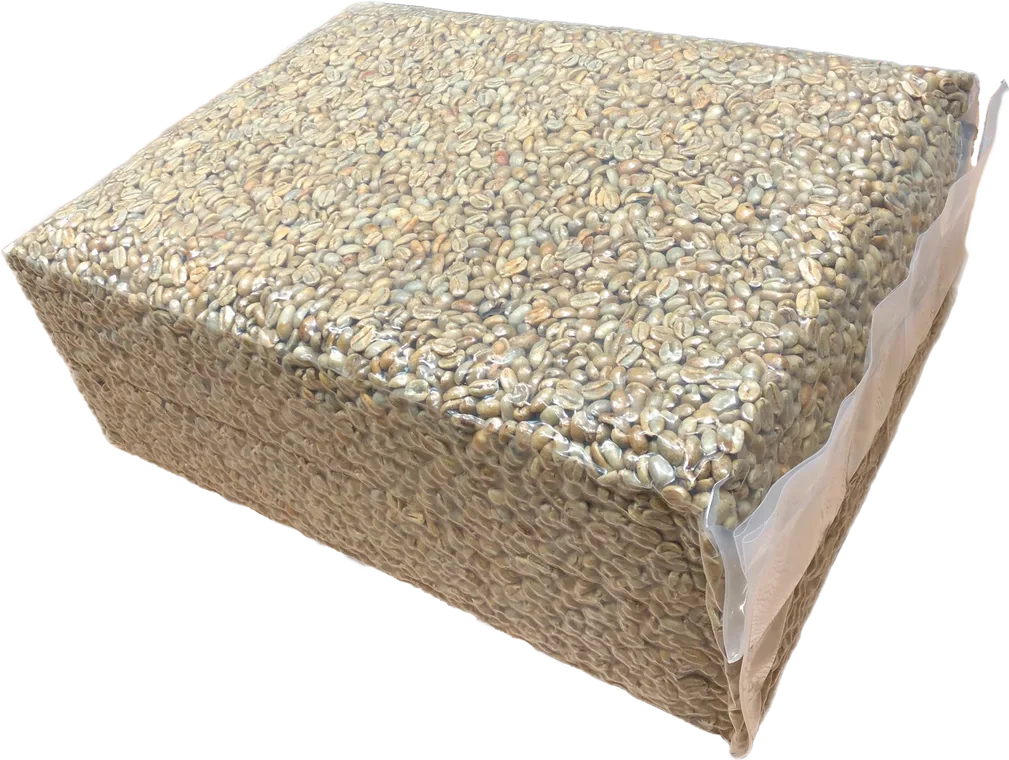
The minimum order for this lot is 24 kg (one box of 2×12 kg vacuum packs). From there we ship anything up to a full container — tell us your target volume and destination and we’ll quote accordingly.
Worldwide — courier to the door, air freight or a full container, depending on volume. We deliver on FOB, CIP, CIF or DDP terms and confirm lead times for your destination together with the quote.